
The Most Durable Flooring for Irish Families, Room by Room
Waterproof SPC, AC5 laminate, LVT, engineered wood and carpet ranked room by room for busy Irish family homes, with the trade-offs on warmth and repair.
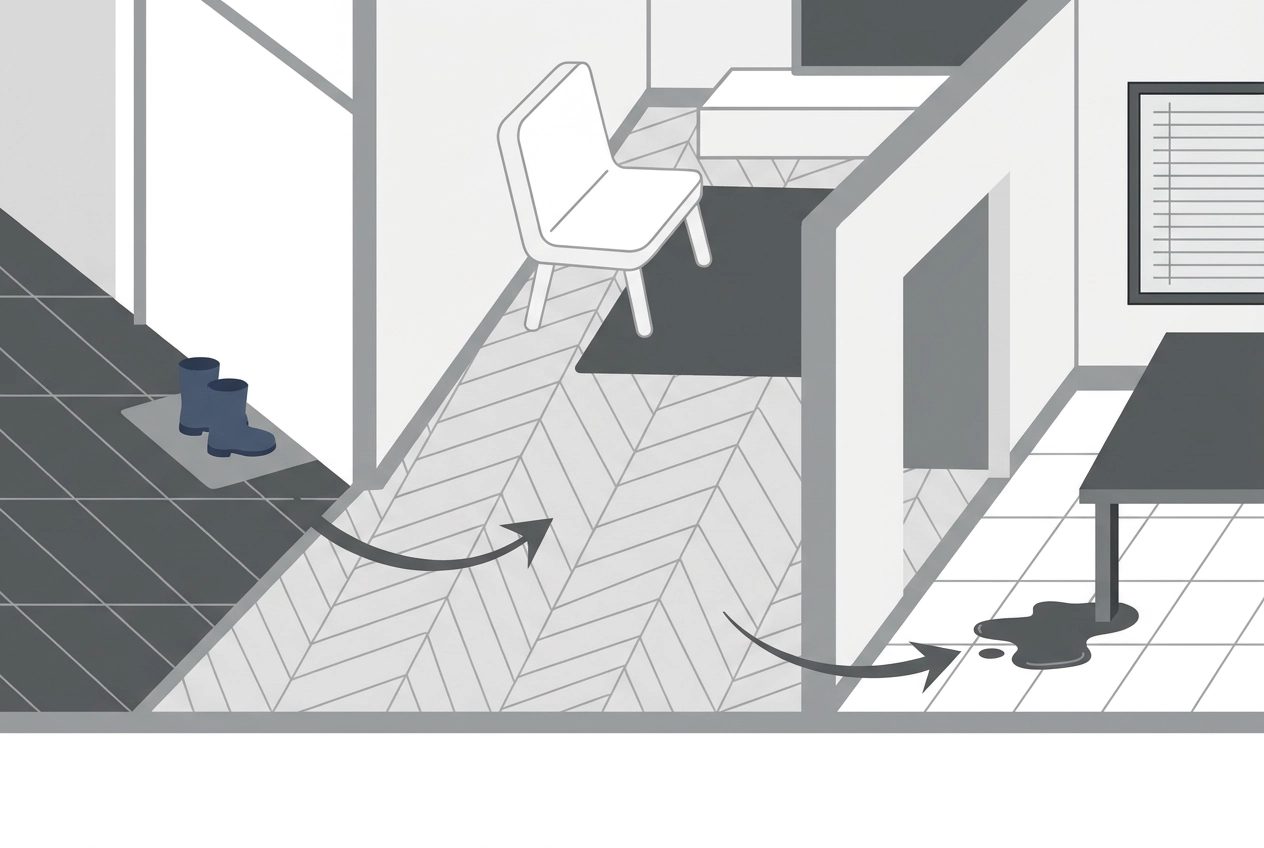
Ask five Irish families which floor lasts best, and you'll get five different answers. The hallway floor that shrugs off muddy boots might be the wrong choice for a cosy bedroom, and the waterproof flooring that saves a kitchen can feel cold underfoot in a living room. That's why this post doesn't crown one winner. Instead, we're going room by room, matching real options to real family mess. We'll compare waterproof SPC, high AC-rated laminate, LVT, engineered wood and carpet, with the trade-offs on warmth, noise and repairability spelled out. You'll see why durability is not just a product label but a room-by-room question, what waterproof and water resistant really mean on a spec sheet, how AC ratings work, and where engineered wood earns its place. We'll also cover hallways, kitchens, living rooms, bathrooms, utility rooms, downstairs WCs, bedrooms and kids' rooms, plus quick answers on waterproof flooring, AC5 and kitchen choices. At 5th Avenue Floor Store, a family-run Dublin company, we offer carpet, laminate, vinyl and herringbone flooring with professional fitting, so you can explore different ranges and styles before you decide where to spend and where it's safe to save.
Durability Is a Room-by-Room Question, Not a Product Label
There is no single most durable floor. Anyone selling you one is selling a label, not a room. The board that shrugs off a kitchen spill can look tired in a hallway and feel cold and loud in a bedroom.
Four stressors shift from room to room: standing water and spills; grit and scratch; point loads from chairs, high chairs, toy boxes and sofa legs; and underfoot warmth and noise. Score your house against those four.
The trade-off runs through every section: the harder and more water-tolerant a floor is, the narrower the repair options. A click plank lifts and replaces. A glued or floating floor is a bigger job. Carpet is the only category most families can have patched.
Every AC rating, water-resistance statement and underfloor heating claim belongs on the manufacturer's data sheet or product label, not a shelf-edge marketing line. Check that document before buying.
So choose per room, then spend where going cheap costs most: almost always the hallway, the kitchen and the bathroom. Comparing flooring materials on value shows where the budget lands.
The Five Flooring Families You Are Choosing Between
Five families, briefly.
Laminate: printed decor under a clear wear layer on a core board. The AC rating is the trade shorthand for wear resistance, and EN 13329, the European laminate standard, sets out the classification system behind it, so high-AC boards suit the traffic a family generates.
Vinyl, LVT and waterproof composite (SPC): printed decor on a plastic core. These are what shops usually mean by waterproof flooring, because the core does not swell when water sits on it.
Engineered wood: a real wood top layer bonded to a stable core, warm underfoot and sandable, but the least forgiving of standing water around the joins.
Carpet: the only family that is quiet by default and patchable rather than replaceable. In a hall or kitchen, durability comes down to fibre, twist and pile density rather than a rating.
Herringbone: a layout, not a material. Ask what the planks are made of; our comparison of herringbone flooring materials does exactly that.
Our Dublin showroom covers carpet, laminate, vinyl and herringbone flooring. Matching one to each room is the point of this guide.
Waterproof vs Water Resistant: What the Labels Actually Mean
Waterproof means the core will not swell or come apart if water sits on it. That is why searches for waterproof flooring and waterproof composite flooring lead to plastic-core planks and tiles.
Water resistant is a smaller promise: it copes with splashes and fast clean-ups but still expects you to mop up. It's usually about the surface and the joint treatment, not permission to leave a puddle overnight.
The weakness in any click floor is the joint, not the face. A slow leak under a dishwasher or washing machine reaches the core before the surface ever shows a mark. If you're weighing up laminate water resistant boards, that distinction matters more than the label.
Now add Ireland: wet coats at the front door, a damp concrete slab, condensation on a cold external wall. Moisture under the floor has to be sorted at installation, not hidden by a waterproof top layer.
Working rule: go waterproof where water lands and stays (kitchen, utility, bathroom, downstairs WC). Water resistant is fine wherever water only splashes and gets wiped.
AC Ratings and AC5 Laminate: Reading Wear Resistance Properly
AC ratings are the laminate trade's shorthand for wear resistance: the higher the number, the more abrasion the surface is built to shrug off. Don't take a blog's word for what each grade means. Ask for the manufacturer's data sheet or the standard itself.
AC5 sits at the heavy domestic, light commercial end. In a busy Irish house, that means hallways, kitchens and living rooms, not a spare bedroom.
One distinction saves arguments later. Wear resistance is not scratch resistance, and it is not water resistance. Grit under a buggy wheel can still scuff a high-rated board, and a spill still needs wiping up.
Look underneath the wear layer too. Core density and how tightly the joints lock decide how a plank behaves when school bags and bikes go over it in a Dublin hall.
So ask in any showroom: what is the AC rating, and what is the water-resistance statement? Both should be available in writing. Our guide to choosing the right laminate grade for each room unpacks this further, and next we look at the hallway.
Hallway and Entryway: The Hardest Working Floor in the House
Rain, grit, salt, muck, dripping coats, buggies, bikes, and one narrow track from the front door to the stairs. That's where those ratings get tested hardest.
High-AC laminate with a water-resistant statement handles the footfall; vinyl and waterproof composite planks handle the wet and the traffic. Carpet feels warmest but looks grubby first in the doorway track.
Warmth matters here. Irish halls often sit over a suspended timber floor or a cold slab, and plastic-core floors run cooler underfoot. A long runner, or carpet on the stairs and landing, is the practical fix rather than swapping materials; planning room by room helps here.
Repairs decide it. A click plank can be swapped if you keep spares from the same batch; carpet can be patched from an offcut, so budget for those spares as part of the job.
Herringbone suits a hall beautifully, but the pattern is neutral on durability. Ask what the planks are made of before you fall for the layout.
Kitchen: Choosing the Best Flooring for Kitchen Life
If the hallway is the hardest worker, the kitchen is the messiest. Sink splashes, dishwasher leaks, dropped plates, chairs scraped in and out, crumbs under the table, and more mopping than anywhere else.
Waterproof flooring earns its money here. Plastic-core vinyl and composite planks shrug off standing water in a way wood and most laminate simply do not, which is why the best flooring for a kitchen usually has a plastic core.
Prefer the look of water resistant laminate flooring? Why Choose Laminate Flooring? It can work, but keep it away from the sink run and dishwasher. A leak left overnight is a real risk to the joints, not a cosmetic issue.
Warmth and noise matter too. Tile is cool and loud underfoot, plastic-core planks are warmer and a little quieter, wood is warmest, and carpet in a kitchen is a cleaning commitment most families regret.
On repairs, click planks can be lifted and swapped if you keep spares. A glued floor with one damaged board is a bigger job. This is the second room where cutting cost is a false saving.
Living Room: Where Engineered Wood Earns Its Place
The kitchen's water problem mostly stops at the door. In the living room the stressors shift: fewer spills, more point loads from sofa legs, coffee tables, toy boxes and high chairs, the occasional dropped object, and long hours where underfoot comfort is what you notice.
This is where engineered wood earns its place. A real wood top layer over a stable core feels warm underfoot, ages rather than dates, and can be sanded back and refinished instead of replaced. Our guide to solid wood vs engineered wood in a Dublin home covers where each one makes sense.
Be honest about the limits. A radiator leak or a knocked-over vase sitting on the joins is a real risk, the subfloor must be stable and dry, and a damaged board is the priciest repair per square metre here.
Mid to high AC laminate is the value alternative, with better joint water tolerance, but the face cannot be sanded back once it dulls.
Upstairs, noise matters most. A thicker or felt-backed vinyl, or a rug over timber, does more for sound reaching the room below than any board choice.
And if the children are small and the rug is currently a den, a good carpet, plain or with a hard-floor border, is the more repairable answer.
Bathrooms, Utility Rooms and Downstairs WCs
These are the smallest rooms with the highest water risk per square metre, and the classic floor killer is rarely a flood. It is a slow leak from a toilet seal or a washing machine connection that nobody notices for a week. Waterproof vinyl and waterproof composite planks are the sensible default here, and our waterproof SPC flooring collections are built for exactly this. Properly fitted sheet vinyl also limits how much water reaches the subfloor at the edges.
Laminate does not belong here, water resistant or not. The risk is water sitting at the joints and under the board, not splashes on the face.
Think about pipework too. A click vinyl can be lifted and refitted when someone needs to get at a valve, which beats a glued or fully tiled floor.
Ventilation and subfloor moisture matter more than the finish. A utility room with a condenser dryer and a cold external wall is a humidity problem first and a flooring problem second.
Upstairs, the priorities shift entirely.
Bedrooms and Kids' Rooms: Where Carpet Wins on Comfort and Repair
Upstairs, the pressures change. No wet buggies here. Instead: bare feet on a cold morning, noise dropping into the room below, a floor you want to sit and kneel on, and the occasional night-time accident rather than heavy footfall.
Carpet answers all four. It's warm, it's quiet, and it's the only category you can cut and patch after a stain instead of replacing a whole run. In a child's room, that patchability beats any rating on a box.
Ranges matter as much as fibre here. A tight loop or a good twist pile in a mid-tone hides what a bedroom actually sees. A deep luxurious pile feels lovely underfoot but is fiddlier to clean around a bed and a toy box.
Prefer a hard floor for allergy or cleaning reasons? A warmer vinyl or laminate with a large rug gets you most of the practical benefit, minus the patch repair.
Keep your carpet offcuts after fitting: a patch from the same batch vanishes in a doorway or under a bed. And carpet on the stairs and landing is the cheapest acoustic upgrade in the house.
Quick Answers on Waterproof Flooring, AC5 and Kitchen Choices
Carpet keeps bedrooms quiet. Here are the questions readers ask most.
Is laminate flooring waterproof? No. Water resistant laminate flooring handles splashes and quick clean-ups, not standing water. If you need genuinely waterproof flooring, look at plastic-core vinyl and composite planks.
What does AC5 mean? AC5 sits at the top of the laminate wear-rating scale, aimed at heavy traffic. It earns its keep in a hallway, kitchen or busy living room, not a spare bedroom. Wear resistance is not scratch or water resistance.
What is waterproof composite flooring? Shorthand for rigid plastic-core planks, which is why the term dominates kitchen searches. Ask which vinyl and composite ranges are actually stocked before planning around one name.
What is the best flooring for a kitchen in Ireland? A waterproof plastic-core vinyl or composite in a textured mid-tone finish for the sink and dishwasher zone. Handle warmth and quiet with underlay or a rug, not carpet.
Can these floors go over underfloor heating or a concrete slab? Only where the manufacturer's compatibility statement for that exact product says so, and only after subfloor moisture is checked. That's a fitting conversation, not a label promise.
Where to Spend, and Where It Is Safe to Save
Put your money where water lands. The hallway, kitchen and bathroom are where cheap flooring fails early and visibly: water damage does not care how good the board looked on day one. Spend there on waterproof vinyl or composite planks, or high-AC laminate where traffic runs but water only splashes.
Bedrooms are the safe saving. A mid-range twist pile carpet beats a budget hard floor you have to look at every morning, and it can be patched.
Match material to stressor, not trend: waterproof in wet rooms, high-AC laminate or vinyl where traffic runs, engineered wood where you want warmth and refinishing, carpet where you want quiet.
Two habits for any showroom: ask for the AC rating and the water-resistance statement in writing, and keep spare planks or carpet offcuts from the same batch after fitting. Choose per room first, and the budget stretches much further.
Conclusion
Durability is not a single label. It is a room-by-room decision. Match the material to the stressor: waterproof vinyl or composite where water lands, high-AC laminate or vinyl where traffic runs, engineered wood where warmth and refinishing matter, and carpet where quiet and comfort matter most. Spend in the hallway, kitchen and bathroom; save safely in bedrooms. Always ask for the AC rating and water-resistance statement in writing, and keep spare planks or carpet offcuts from the same batch.
Your next step is simple. Bring your room list to a showroom, ask which vinyl and composite ranges are actually stocked, and confirm underfloor heating or concrete slab compatibility for the exact product. Check subfloor moisture before fitting. Choose per room first, and your budget will stretch further while your floors handle real Irish family life.