
Flooring Guide
Best Flooring for Underfloor Heating in Ireland
Underfloor heating is now standard in most new and heavily renovated Irish homes. The floor you lay on top of it decides how efficiently that heat reaches the room — and how the floor itself behaves over years of heating cycles. This guide explains the practical differences between engineered hardwood, laminate, SPC and carpet.
How flooring affects underfloor heating
Underfloor heating warms a room through the floor surface, so everything laid above the pipes or mats acts as a layer the heat must pass through. The more thermal resistance that build-up has — floor covering plus underlay — the harder the system works and the slower the room responds.
Thermal resistance is expressed as an R-value, and for carpets and underlays you will also see tog ratings. Heating system manufacturers typically publish a maximum combined figure for the whole floor build-up. Because that figure varies by system, treat published suitability claims as product-specific rather than universal.
Stability matters as much as heat transfer. A floor over underfloor heating expands and contracts as the system cycles, so board construction, acclimatisation and expansion gaps all affect long-term performance.
Flooring types compared
Engineered hardwood
A real timber wear layer bonded to a cross-layered core. That construction makes it considerably more dimensionally stable than solid timber as temperatures change, which is why engineered boards are the usual wood choice over underfloor heating.
Advantages: natural material, can be sanded and refinished depending on wear-layer thickness, warm appearance.
Considerations: board thickness and width influence heat transfer, acclimatisation is important, and maximum surface temperature limits are set by the manufacturer.
Browse engineered hardwood flooringLaminate
Laminate is a dense fibreboard core with a printed decor and hard wear layer. Many ranges are approved for use over underfloor heating and conduct heat well, provided a compatible underlay is used.
Advantages: hard-wearing, wide choice of wood and herringbone designs, straightforward floating installation.
Considerations: the underlay is critical, and water-resistance varies by range, so match the product to the room.
Browse laminate flooringSPC / waterproof
Rigid-core SPC flooring is thin and dense, so it generally transfers heat efficiently, and it is fully waterproof — a useful combination in kitchens, bathrooms and utility rooms where underfloor heating is common.
Advantages: waterproof, stable, low build-up height, easy to maintain.
Considerations: manufacturers specify maximum surface temperatures and often require gradual heating up and cooling down at the start and end of the heating season.
For a more detailed look at its construction, water resistance, advantages and limitations, read our complete guide to SPC flooring in Ireland.
Browse waterproof SPC flooringCarpet
Carpet can work with underfloor heating, but carpet and underlay together are the most insulating combination of the four. The total tog of that build-up is what matters, which is why lower-tog underlays are normally used.
Advantages: soft and quiet underfoot, ideal for bedrooms and landings.
Considerations: check the carpet and underlay tog figures together against the heating system's limit before ordering.
Browse carpetsUnderlay, moisture and sub-floor considerations
With underfloor heating the underlay does two jobs: it supports the floor and it sits in the heat path. Underlays designed for underfloor heating keep thermal resistance low, and many include an integrated moisture barrier for use over concrete or screed. We stock underlays within our flooring accessories range and match them to the floor and heating system you have.
New screed holds construction moisture for a considerable time and must be dry before flooring goes down. Commissioning the heating system according to the installer's schedule before fitting is normal practice, and a moisture barrier is typically required over concrete sub-floors.
Choosing room by room
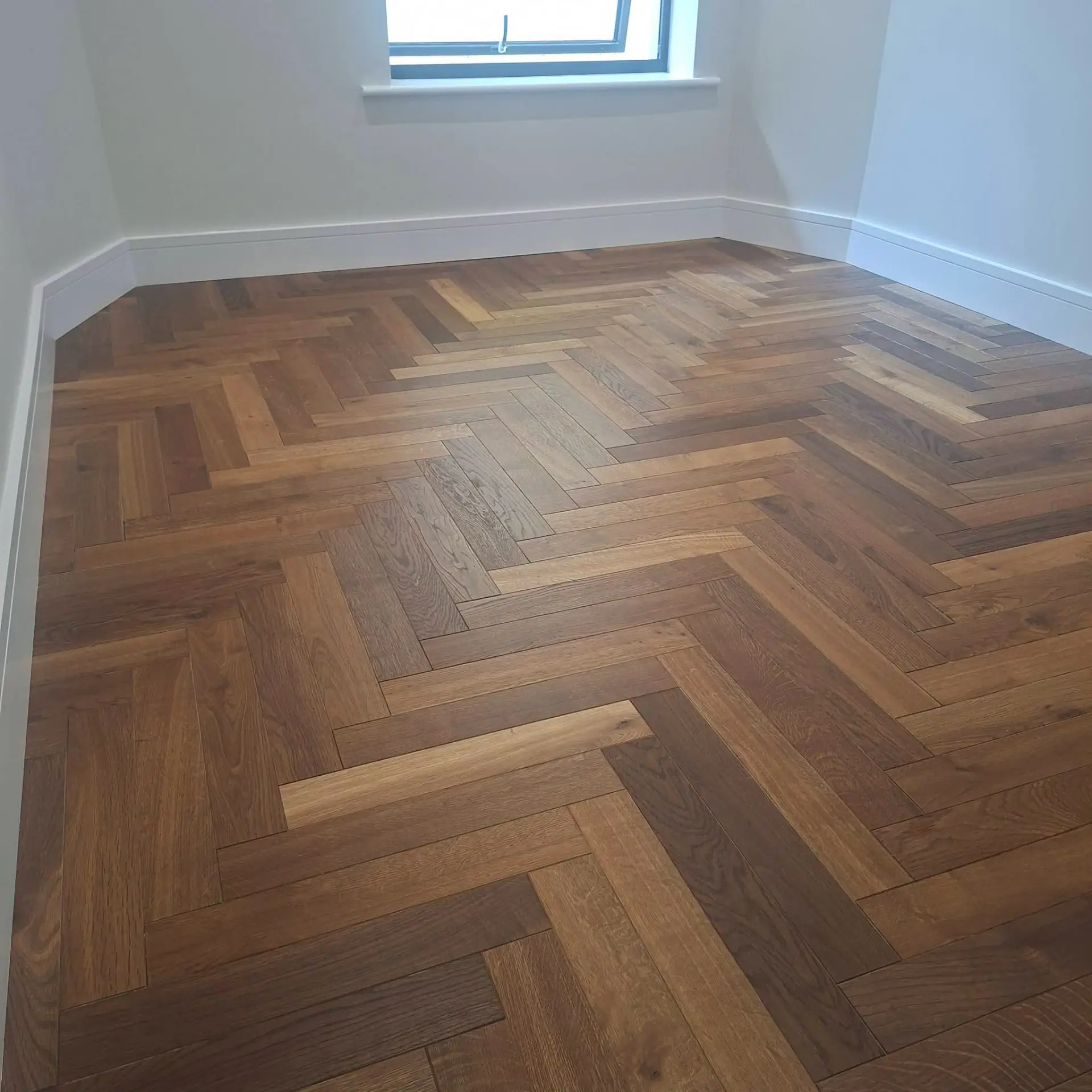
In practice most Irish homes mix floor types. Kitchens, utility rooms and bathrooms suit waterproof SPC; hallways and living rooms often take engineered hardwood, herringbone or laminate; bedrooms and landings commonly stay in carpet. Our engineered herringbone collections are frequently chosen for hallways in heated new homes.
Exact suitability always depends on the specific product and heating system. Check the manufacturer specification, or speak to the 5th Avenue team and we will confirm it for the range you are considering.
Building or moving into a new home? See our new build flooring service in Dublin.