
Wood Flooring in Dublin: How to Choose and Fit the Right Floor for Your Irish Home
Choosing wood flooring in Dublin? Compare solid wood, engineered wood and herringbone options with expert advice on Irish climate, UFH and professional fitting.
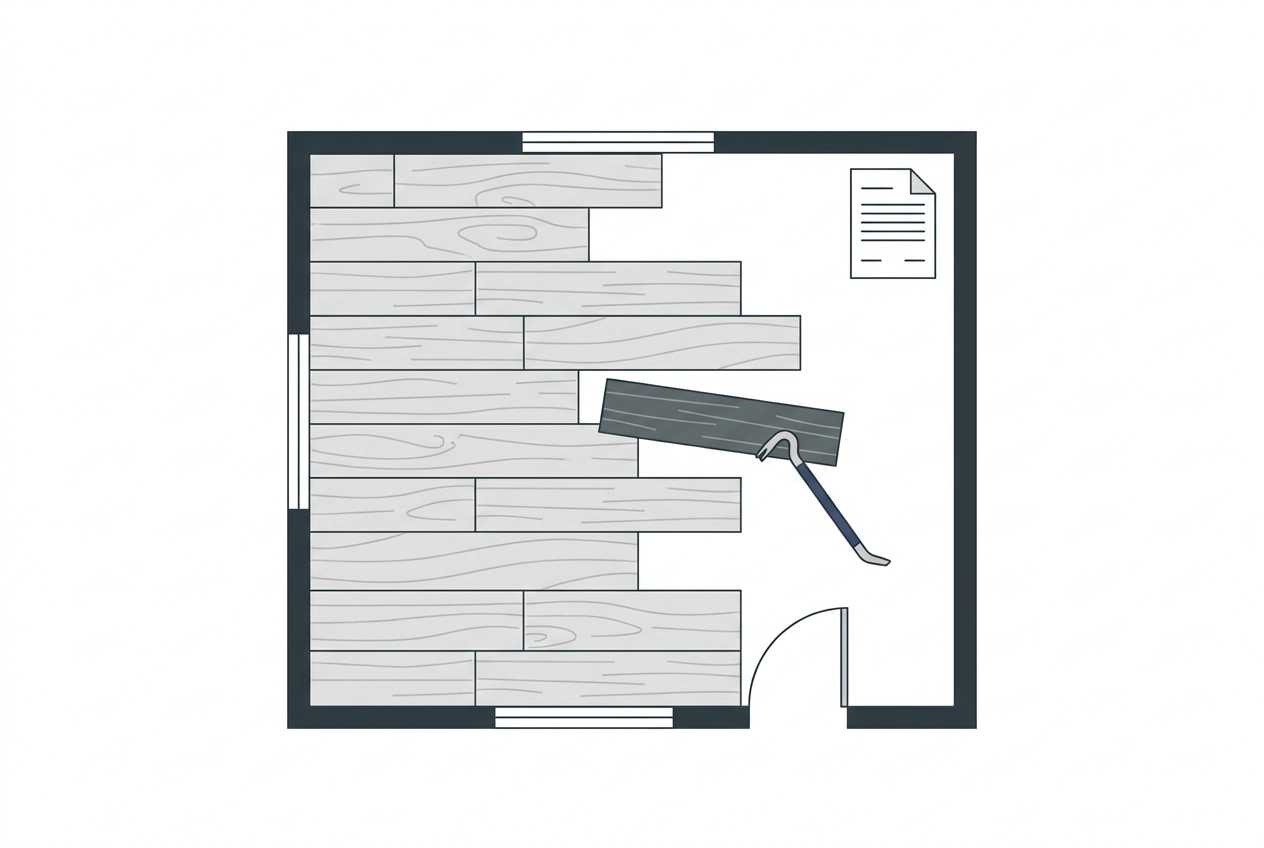
There is something timeless about walking into an Irish home and feeling the warmth of a beautiful wood floor beneath your feet. Whether you are renovating a Victorian terrace in Ranelagh or fitting out a new build in Clondalkin, choosing the right flooring can completely transform how a space looks and feels.
If you have been searching for guidance on wood flooring Ireland Dublin options, you are in the right place. The market is full of choices, from solid hardwood and engineered boards to laminate alternatives, and knowing where to start can feel overwhelming, especially if this is your first time tackling a flooring project.
This guide is designed with beginners in mind. We will walk you through the key factors to consider before making a purchase, the most popular wood types suited to Irish homes, and the practical steps involved in getting your floor fitted correctly. By the time you finish reading, you will have the confidence and knowledge to make a smart, informed decision that suits both your budget and your home.
Why Wood Flooring Remains the Premium Choice for Dublin Homes
If you are thinking about upgrading the floors in your Dublin home, the numbers alone make a compelling case for choosing wood. Ireland's wood flooring market is forecast to grow at a 7% compound annual growth rate from 2026 to 2033, a figure that dwarfs the North American market's 2.46% CAGR and comfortably outpaces the global average of 4.3%. This is not a mature market plateauing; it is an accelerating one, driven by rising renovation activity, growing consumer confidence, and a genuine appreciation for quality underfoot. Dublin homeowners are not simply following a trend; they are making a financially informed decision.
Wood flooring delivers something that vinyl and laminate simply cannot replicate, particularly in Dublin's substantial stock of period, Victorian, and Edwardian properties. The warmth, character, and natural variation of real wood complement the proportions and architectural detail of older homes in a way that synthetic alternatives fall noticeably short of. Beyond aesthetics, real wood flooring is consistently cited by property professionals as a value-adding feature at resale, giving Dublin buyers a long-term return on their investment rather than a short-term cosmetic fix.
Engineered wood is currently Ireland's fastest-growing product segment, and the reason is practical as much as it is aesthetic. Its layered, cross-ply construction makes it dimensionally stable under the temperature fluctuations generated by underfloor heating systems, which are increasingly standard in Irish new-builds and retrofits. According to 2026 engineered hardwood trend analysis, warm tones, wide planks, and matte finishes are defining the segment right now; all characteristics that suit both contemporary Dublin apartments and traditional family homes.
Solid wood, meanwhile, retains the largest revenue share in Ireland, confirming that Dublin buyers are not trading down. They are choosing premium quality with confidence. Globally, hardwood flooring market research confirms that the luxury and upper-mid segment is the most resilient category in 2026, precisely because vinyl has commoditised the budget end of the market and made genuine wood's premium positioning clearer than ever. Investing in quality wood flooring is not an indulgence; it is the smarter long-term choice.
Solid Wood vs. Engineered Wood: Which Is Right for Your Dublin Home?
Choosing between solid and engineered wood is one of the first decisions you will face when exploring wood flooring in Ireland. Dublin homeowners are often surprised to discover that this is not simply a question of budget, but one of performance, practicality, and how each product behaves in the specific conditions of an Irish home.
1. Solid wood is a generational investment. Solid wood flooring is milled from a single continuous piece of timber, running through its full thickness from face to back. Because there is no composite core, the surface can be sanded back and refinished multiple times over its lifetime, with most solid boards carrying enough wear layer depth to support three to five full sanding cycles. For a Dublin family home, that translates into a floor that can be refreshed after decades of use rather than replaced, making it one of the few flooring materials that can genuinely outlast the building generation that installed it.
2. Engineered wood handles Ireland's humidity more reliably. Engineered wood is built from a real hardwood veneer bonded over multiple cross-layered timber or plywood cores. That cross-ply construction resists the expansion and contraction that occurs when humidity levels shift, which in Ireland they do regularly throughout the year. Where a solid board might swell in a damp November or shrink back during a dry, centrally heated winter, an engineered equivalent holds its shape with considerably less movement, reducing the risk of gapping or ridging at the board joints.
3. Moisture and subfloor preparation are critical for solid wood in Irish homes. Solid wood is genuinely sensitive to moisture, and this matters particularly in older Dublin properties where ground-floor damp is a recognised challenge. Before any solid wood floor is laid, the subfloor must be assessed for moisture content and properly prepared. Skipping this step is the most common cause of floor failure. Professional installation by experienced craftsmen, rather than a DIY approach, is strongly recommended to ensure subfloor conditions are correctly evaluated and addressed before laying begins.
4. Engineered wood is the better choice for underfloor heating. If your home has underfloor heating, or if you are planning to install it, engineered wood is the recommended product type. Its layered construction offers lower thermal resistance than solid timber, allowing heat to transfer more efficiently through the floor surface. It also responds more predictably to the temperature cycling that underfloor systems create, reducing the risk of cupping, warping, or gapping that can affect solid boards in the same conditions.
5. Price is influenced more by species and grade than construction type. Many homeowners assume engineered wood is always cheaper than solid. In practice, the gap is often smaller than expected, and a premium engineered oak in a wide-plank format can cost more than an entry-level solid strip floor. The variables that move the price most significantly are the timber species, the board width, the grade of the face veneer, and the surface finish. Wider boards, select grades with minimal knots, and brushed or hand-scraped finishes all carry a premium regardless of whether the product is solid or engineered.
6. Comparing both types side by side is straightforward at 5th Avenue Floor Store. At 5th Avenue Floor Store, both solid and engineered wood flooring are available across a carefully selected range of species, grades, and finishes, allowing Dublin homeowners to handle and compare real samples before committing. For a useful independent overview of the core construction differences, you can also review resources like this solid vs engineered wood flooring comparison to build your knowledge before visiting. With over 20 years of professional fitting experience, the team can assess your specific subfloor conditions, room use, and heating setup and point you confidently toward the right product for your home.
Herringbone Flooring: Dublin's Favourite Statement Pattern
Few flooring choices make an immediate visual impact quite like herringbone, and Dublin homeowners have embraced it enthusiastically. Over recent years, the pattern has appeared across an extraordinary range of properties, from Georgian and Victorian terraces in Ranelagh and Rathmines, where it complements original period features beautifully, to contemporary open-plan new-builds in Clongriffin and Cherrywood, where it adds warmth and character to otherwise minimal spaces. Its ability to feel equally at home in a 19th-century red-brick hallway and a 21st-century kitchen-diner is precisely what has driven its rise to become one of the most requested flooring patterns in Dublin today.
Herringbone vs. Chevron: Understanding the Difference
Before choosing, it helps to understand the distinction between two patterns that are frequently confused. Classic herringbone uses rectangular planks laid at 90-degree angles to one another, creating a traditional V-shaped zigzag effect across the floor. Chevron is a close relative, but the planks are cut at an angle at each end so they meet precisely to form clean, unbroken parallel diagonal lines. Herringbone has a more textured, interlocking quality; chevron reads as sleeker and more geometric. For most Dublin interiors, herringbone remains the more popular of the two, though both are available through specialist suppliers. You can explore herringbone floors across wood and LVT formats to compare how each pattern works in different room settings.
Choosing the Right Scale for Your Space
Scale matters enormously with herringbone. Full-size herringbone planks suit larger rooms such as open-plan living areas and master bedrooms, where the pattern has room to breathe and create its full visual effect. In compact spaces such as hallways, landings, or box rooms, micro-herringbone is a far smarter choice. Smaller, narrower planks create the same directional movement without overwhelming a tight footprint, keeping the space feeling proportionate rather than busy.
Solid or Engineered: The Right Material Choice
Herringbone is available in both solid and engineered wood formats, and the decision between them matters more here than with standard straight-lay flooring. Engineered herringbone has become increasingly popular in Dublin homes fitted with underfloor heating or poured concrete subfloors, both common in newer apartment blocks and modern estates. Engineered boards handle temperature fluctuation and moisture far more reliably than solid wood in those conditions. For a detailed breakdown of herringbone floor costs in Ireland for 2026, current pricing guides can help you budget accurately across both material types.
Why Professional Installation Is Non-Negotiable
Herringbone is unforgiving of error. Consistent angles, tight joints, and perfectly straight reference lines must be maintained across the entire floor; even a small deviation early in the installation compounds visibly as the pattern extends outward. A poorly laid herringbone floor is immediately noticeable and expensive to correct, since rectifying it typically means lifting and relaying the entire area. With over 20 years of craftsman fitting experience, our team understands the precision this pattern demands, ensuring your finished floor looks exactly as it should from every angle.
Wood Flooring and Ireland's Climate: What Every Dublin Homeowner Must Know
Ireland's temperate oceanic climate creates a uniquely demanding environment for wood flooring. Dublin experiences persistently elevated humidity levels throughout the year, typically ranging between 75% and 85% relative humidity, with wet winters and mild, damp summers offering very little seasonal relief. Because wood is a natural hygroscopic material, it continuously absorbs and releases moisture in response to these atmospheric conditions. The result is a predictable cycle: boards expand when ambient humidity rises and contract when heated interiors dry the air in winter. This movement happens primarily across the width of each board, not along its length, and planning for it is not optional. It must be built into every stage of the installation process.
Acclimatisation: A Step You Cannot Skip
Acclimatising flooring correctly before installation in Ireland is the single most important preparatory step a homeowner or fitter can take. The process involves storing the unopened packs flat inside the actual room where the floor will be fitted, never in a garage, shed, or utility space, for a minimum of 48 to 72 hours. Solid wood species, because of their greater density and moisture sensitivity, typically require between 5 and 14 days to reach equilibrium with the room. The target environment during this period is 18°C to 24°C with relative humidity between 40% and 60%. Skipping this step is one of the most common mistakes made in Dublin installations, and it is entirely avoidable.
What Goes Wrong Without Proper Preparation
The failure modes that follow inadequate acclimatisation are consistent and well-documented. In winter, when central heating reduces indoor humidity sharply, boards that were not properly acclimatised will gap as they contract beyond their installed position. In summer, when external humidity rises, those same boards can buckle upward or cup across their face as they absorb excess moisture. These are not random defects; they are the predictable consequences of fitting boards that have not yet stabilised to their environment. Understanding why engineered hardwood needs to acclimate before installation makes clear that even the most dimensionally stable products are vulnerable without this step.
Subfloor Moisture and Expansion Gaps
Before any wood floor is laid, subfloor moisture testing is non-negotiable. Ground-floor concrete slabs, which are common across Dublin's older terraced housing stock, are particularly prone to retaining ground moisture. Target moisture content for solid wood subfloor conditions sits at 6% to 9%; for engineered timber, 7% to 11%. Where concrete slabs exceed safe thresholds, a damp-proof membrane must be installed before fitting begins. Without it, moisture migrates upward into the boards, causing irreversible damage from below.
Equally important are perimeter expansion gaps, typically 10 to 15mm around the full perimeter of each room. These gaps allow the floor to move seasonally without buckling, cracking, or pressing against skirting boards. They must be correctly sized relative to room dimensions and board species. This is a technical detail that experienced professional fitters get right consistently because they understand how specific species behave in Irish conditions over time.
Why Engineered Wood Is the Smarter Choice for Dublin Homes
Engineered wood's cross-layered core construction counteracts the natural tendency of timber to move with humidity changes. Each layer is bonded with grain running in alternating directions, which distributes and resists moisture-driven stress far more effectively than a solid plank. Engineered boards also acclimatise faster, generally within 2 to 5 days, and tolerate a wider moisture content range. For open-plan living areas and kitchen-diners where humidity levels fluctuate most, this dimensional stability makes engineered wood the more practical and lower-risk choice for Dublin homeowners.
Underfloor Heating and Wood Flooring: A Dublin Homeowner's Compatibility Guide
Underfloor heating has shifted from a luxury feature to a standard specification across a significant proportion of Dublin new-builds, and it is increasingly installed as part of whole-home retrofits under SEAI energy upgrade schemes. This makes UFH compatibility one of the most practical questions you need to answer before choosing any wood flooring for your home. Getting this decision wrong can result in costly damage, voided warranties, and a floor that fails within years of fitting. The six points below cover everything a Dublin homeowner needs to know.
1. Engineered Wood Is the Safest Choice Over UFH
Engineered wood's cross-layered construction, with a real hardwood veneer bonded over alternating layers of plywood or HDF, makes it far more dimensionally stable than solid wood under the repeated heating and cooling cycles of an underfloor system. Where solid wood expands and contracts with temperature changes, engineered boards are engineered to resist those forces. This is why engineered wood is the recommended product type for UFH in the vast majority of technical guidelines. You can read more detail on using engineered wood flooring with underfloor heating to understand the product-level specifics.
2. Solid Wood Over UFH Is Possible, But Conditional
Solid wood is not automatically ruled out, but the conditions are strict. The UFH system must operate at low temperatures, and the specific product must carry explicit manufacturer approval for use over heated subfloors. Species and thickness both influence suitability, with narrower, thinner boards in more stable species performing better than wide, thick planks in reactive timbers. Always request written manufacturer approval documentation before purchasing solid wood intended for a heated floor. Installing without it will almost certainly void your warranty.
3. Never Exceed 27°C Surface Temperature
The maximum safe surface temperature for any wood flooring over UFH is 27 degrees Celsius. Exceeding this threshold accelerates moisture loss from the timber, dramatically increasing the risk of cracking, splitting, and joint separation. This applies equally to engineered and solid products. Treat 27°C as a hard technical ceiling, not a rough guideline, and ensure your UFH thermostat is set and monitored accordingly from day one.
4. Board Thickness Directly Affects Heat Transfer
Thinner engineered boards transmit heat more efficiently and respond faster to thermostat changes. Boards in the 10mm to 14mm range are generally preferred for UFH installations; boards above 20mm act as significant thermal insulators and slow system responsiveness. For practical guidance on installation specifications, the technical guidance from The Solid Wood Flooring Company on underfloor heating is a useful reference point.
5. Glue-Down Installation Maximises Thermal Performance
For UFH applications, glue-down installation is strongly preferable over a floating floor. Direct adhesive contact between board and subfloor eliminates the air gap that floating systems create, maximising heat transfer efficiency and reducing the risk of boards moving under thermal stress.
6. Commissioning Before Fitting Is Non-Negotiable
Before any wood floor is laid over UFH, the system must complete a full commissioning cycle, gradually raising and then lowering temperature to expel residual moisture from the screed. The system is then turned off and the subfloor allowed to cool fully before and during installation. This protocol protects both the boards and the subfloor bond. At 5th Avenue Floor Store, our fitters follow this commissioning sequence as standard practice on every UFH installation across Dublin and the surrounding areas.
The Most Popular Wood Flooring Styles and Species Right Now
If you are beginning your wood flooring journey, understanding which styles and species are genuinely popular right now will save you time and help you make a confident, future-proof decision. Here is a clear breakdown of what Dublin homeowners and interior designers are actually choosing in 2026.
1. White Oak: The Species Everyone Wants
White oak has firmly established itself as the most sought-after species in Dublin and across European markets. Its appeal lies in versatility; the pale, open grain and neutral undertones function as a canvas that works equally well in a contemporary Clontarf new-build or a Georgian terrace in Rathmines. Unlike some species with strong visual personalities, white oak adapts. It accepts a wide range of surface treatments including smoked, brushed, oiled, and matte-lacquered finishes, which means it suits almost any interior direction a Dublin homeowner might be pursuing. According to current hardwood flooring trends for 2026, white oak and European walnut continue to lead premium specifications precisely because they offer depth without visual noise.
2. Wider Planks and Longer Boards
The shift toward wider, longer boards is one of the most visible changes in wood flooring over the past decade. Formats of 190mm to 240mm wide, with board lengths exceeding 2.0 metres, are now the expected baseline rather than a premium upgrade. Fewer joints across a floor creates a calmer, more spacious visual result, which suits the open-plan living spaces common in Dublin homes. Narrow strip flooring, once standard, can now read as dated against these wider proportions. Importantly, wide-format boards are best delivered in engineered construction, as solid timber at these widths moves too much with Ireland's seasonal humidity fluctuations.
3. Matte and Brushed Finishes Over High-Gloss
High-gloss lacquers have been overtaken entirely. Dublin buyers are consistently choosing matte and brushed finishes because they look more natural underfoot, feel more tactile, and are far more forgiving of everyday scuffs and marks. As noted in 2026 flooring trend analysis, finishes that feel authentic and lived-in have replaced the polished, reflective surfaces of the previous decade.
4. Light and Natural Tones Leading Colour Choices
The grey-washed and dark-stained floors that were fashionable roughly eight to ten years ago have fallen sharply out of favour. Pale oaks, ash, and light-stained European timbers are now far outselling their darker counterparts. Warm mid-tones including honey oak, soft blonde, and what the industry calls greige are doing strong commercial work for homeowners transitioning away from cooler palettes. Natural wood colours have a staying power that trend-driven stains often lack, making them a sound long-term investment.
5. Smoked and Character-Grade Oaks for Period Homes
For Dublin homeowners renovating Victorian or Edwardian properties, smoked and character-grade oaks are increasingly the preferred choice. These grades feature natural knots, grain variation, and colour movement rather than the clean, uniform appearance of prime-grade timber. This authenticity suits period interiors where warmth and individuality are priorities. Emerging hardwood flooring trends confirm that grain definition and mid-tone treatments that allow natural texture to show through are central to the current "quiet luxury" direction in premium interiors.
6. Herringbone: No Longer Just Traditional
Herringbone continues to grow strongly across Dublin specifications and has moved well beyond its traditional associations. It is now regularly laid in wide-plank engineered oak formats, giving it a contemporary, architectural quality rather than a purely period feel. Entryways, hallways, and open living spaces are popular locations for the pattern, where it introduces visual interest without competing with the rest of the room. Its combination of timeless geometry and modern proportions makes it one of the most consistently requested patterns our fitting team encounters across Dublin projects.
Sustainable and FSC/PEFC Certified Wood Flooring: Why It Matters
For Dublin homeowners, sustainability has moved from a nice-to-have to a genuine purchasing criterion. Understanding the two main certification systems will help you make a confident, informed decision when choosing wood flooring in Ireland.
FSC (Forest Stewardship Council) certification, established in 1993, guarantees that timber has been harvested from forests managed to rigorous environmental, social, and economic standards. When you see the FSC logo on a product data sheet or packaging, it means independent auditors have verified that wildlife habitats are protected, local community rights are respected, and the forest remains healthy and productive over the long term. FSC products carry three distinct labels worth knowing: FSC 100% (all timber from certified forests), FSC Mix (certified and controlled sources combined), and FSC Recycled (reclaimed or post-consumer material). Each label represents a different level of traceability, so knowing which applies to your chosen floor matters.
PEFC (Programme for the Endorsement of Forest Certification), founded in 1999, is the leading certification scheme across Europe, covering 51% of total European certified forest area. It is an equally credible eco-credential, and either FSC or PEFC certification is a reliable indicator of responsible sourcing. Approximately 30 million hectares of European forest carry dual FSC and PEFC certification, confirming the two schemes are complementary rather than competing.
The good news for budget-conscious buyers is that certified products are now widely available across solid wood, engineered wood, and herringbone ranges, with no significant price premium over uncertified equivalents in most cases. Availability has expanded substantially in recent years, removing the historic barrier that once confined certified timber to niche or high-cost products.
When speaking to any flooring supplier, ask three specific questions. First, which certification body covers the product? Second, is the chain of custody documented with a registered CoC number? Third, does the certification apply to the full board or only the face veneer? A supplier who cannot answer these questions clearly is unlikely to hold genuine eco-credentials. Chain-of-custody certification is the critical mechanism that traces timber from managed forest to finished floor through every stage of processing; without it, sustainability claims cannot be independently verified and risk being little more than greenwashing.
Wood Flooring Costs in Dublin: What to Budget
Understanding what you are likely to spend before you visit a showroom puts you in a far stronger position to make confident decisions. Here is a practical breakdown of the costs involved in a Dublin wood flooring project, from materials to fitting.
1. Engineered Wood Flooring: Supply Costs
Engineered wood flooring in Dublin typically ranges from approximately €35 to €90 per square metre for supply only. That wide range reflects the significant variation in species, veneer thickness, board grade, width format, and factory-applied finish. As a useful reference point, mid-range character oak in the popular 190mm board width generally sits around €50 to €65 per square metre. Entry-level engineered options at the lower end of the range tend to feature thinner wear layers and simpler finishes, while premium boards at the upper end offer thicker hardwood veneers, wider planks, and brushed or natural-oil finishes that are more demanding to produce.
2. Solid Wood Flooring: Supply Costs
Solid wood flooring generally starts at approximately €55 to €70 per square metre for standard species and sizes, and reaches €120 or more per square metre for premium species, wide-plank formats, and select grades. The higher entry price reflects the raw timber content and the fact that solid boards can be sanded and refinished multiple times over their lifespan. For homeowners thinking long-term, that extended durability can justify the additional upfront spend.
3. Herringbone: The Material Premium
Herringbone boards carry a modest premium over straight-lay formats in the same species and grade, due to the additional precision cutting required during manufacturing. Budget an extra €5 to €15 per square metre for herringbone-cut boards specifically. It is also worth noting that herringbone installations typically require a 10 to 15 percent material overage when ordering, as the pattern generates more offcuts than straight-lay. Factor this into your total board quantity calculation from the outset.
4. Professional Fitting Costs in Dublin
Labour costs in Dublin vary based on room complexity, subfloor condition, and the pattern being installed. Straight-lay fitting typically ranges from €15 to €25 per square metre. Herringbone installation commands a higher rate, reflecting the additional time, skill, and precision the pattern demands. A mid-range engineered oak floor fitted straight-lay could therefore cost €65 to €90 per square metre all-in, while herringbone solid wood at premium grades could comfortably exceed €160 per square metre installed.
5. Subfloor Preparation: The Cost That Surprises Homeowners
Subfloor preparation is consistently the most underestimated variable in a wood flooring budget. Levelling, damp-proofing, and screeding are site-specific costs that cannot be accurately estimated without a physical inspection. A professional subfloor survey before any quotes are agreed is not an optional step; it is essential protection against budget overruns mid-project. Ireland's climate and construction characteristics create specific subfloor challenges, and discovering them after installation has begun is a significantly more expensive problem to solve.
6. Why Fitting Is an Investment, Not a Cost to Minimise
The framing that separates experienced buyers from first-timers is this: professional fitting is a protection of your flooring investment, not a line item to squeeze. A premium product fitted incorrectly will fail prematurely, voiding manufacturer warranties and creating repair costs that far exceed whatever saving was made on labour. With over 20 years of professional installation experience across Dublin and the surrounding areas, our craftsmen understand that the floor you see is only as good as the preparation and fitting beneath it.
Why Professional Fitting Makes All the Difference
Selecting the right wood flooring is only half the equation. How that floor is fitted determines whether it performs beautifully for decades or develops problems within months. For Dublin homeowners, professional installation is not a luxury add-on; it is a fundamental part of the investment.
1. Subfloor preparation separates professionals from DIY installers
Before a single board is laid, an experienced fitter will assess subfloor moisture levels using calibrated pin and pinless moisture meters. The optimal moisture content for hardwood flooring is 6 to 9%, and the subfloor must be within 2 to 4% of the wood's moisture content before installation can safely proceed. In Ireland's persistently humid climate, this step is especially critical. Professionals will also identify uneven areas, identify the need for a damp-proof membrane, and specify the correct underlay for the subfloor type. These are steps that DIY installers routinely skip, often because the problems they prevent are invisible until it is too late.
2. Expansion gaps require product knowledge and local climate experience
Wood moves with the seasons. Correctly sizing expansion gaps around perimeters, doorways, and fixed obstacles requires an understanding of how a specific product will behave across Ireland's full seasonal humidity range. A generic installation guide cannot substitute for a fitter who has watched floors perform across multiple winters and summers in Dublin homes.
3. Herringbone patterns are unforgiving of even small errors
Geometric patterns demand a level of precision that compounds with every row laid. An error of even a couple of millimetres in the initial reference line will result in a visibly skewed pattern by the time the floor is complete. Professional fitters establish precise reference lines using proven methods and check alignment continuously throughout the installation.
4. Warranty validity frequently depends on professional installation
Many wood flooring manufacturers require professional installation as a condition of the warranty being valid. A DIY-fitted floor that develops cupping, gapping, or delamination may leave the homeowner with no recourse against the supplier whatsoever. Reviewing residential hardwood flooring warranty terms confirms that installation standards are a core warranty condition, not a footnote.
5. Local expertise matters as much as technical skill
At 5th Avenue Floor Store, every floor is fitted by craftsmen with over 20 years of experience working across Dublin and the surrounding areas. That experience brings genuine familiarity with the subfloor conditions, property types, and humidity challenges specific to Irish homes, from older concrete subfloors in mid-century builds to suspended timber floors in Victorian properties. That local knowledge is simply not available in any installation manual.
Choosing Your Wood Floor: Key Takeaways for Dublin Homeowners
The decision ultimately comes down to three practical matches. Choose engineered wood for rooms with underfloor heating or higher moisture exposure. Choose solid wood where you are making a generational investment in a stable, well-insulated space. Choose herringbone wherever you want a statement finish, particularly in period Dublin properties where the pattern feels entirely at home.
Regardless of which product you select, three Ireland-specific steps are non-negotiable: proper acclimatisation of boards before fitting, subfloor moisture testing, and correctly sized expansion gaps around every perimeter. Ireland's climate demands these, and no amount of premium timber will compensate for skipping them.
The best next step is to see the collection in person. Visit the 5th Avenue Floor Store showroom in Dublin, or request a home visit to get advice tailored to your specific rooms, subfloor, and lifestyle.
Contact 5th Avenue Floor Store today for a free quotation and professional consultation. As Dublin's family-run flooring specialists with over 20 years of fitting experience, we are here to help you get it right from the very first step.
Conclusion
Choosing the right wood flooring for your Irish home does not need to be complicated. Keep these key points in mind: match your floor type to your lifestyle and subfloor conditions, choose species and finishes that suit Ireland's damp climate, and always invest in proper preparation before fitting begins. Whether you opt for solid hardwood, engineered boards, or a quality laminate, the right choice will add lasting warmth and value to your home.
Now it is time to take action. Measure your space, set a realistic budget, and visit a Dublin flooring showroom to see your options in person. If you have any questions or need tailored advice, reach out to a local specialist who understands the unique demands of Irish homes. Your perfect floor is closer than you think.